Why most Надувные шары для вашего праздника projects fail (and how yours won't)
Your Party Balloon Dreams Just Popped (Again)
Picture this: You've spent three weeks planning your daughter's birthday party. You ordered 200 balloons online, imagining an Instagram-worthy arch framing the dessert table. The package arrives two hours before guests show up. You rip it open and... half the balloons are the wrong color. A quarter won't inflate properly. The helium tank you rented runs out after 30 balloons.
Sound familiar?
Balloon decoration projects crash and burn more often than anyone wants to admit. I've watched countless party hosts dissolve into tears surrounded by deflated latex and broken dreams. The failure rate? Somewhere around 60% of DIY balloon projects end up significantly different from what people envisioned.
Why Balloon Projects Go Sideways
The problem isn't you. It's that nobody tells you the truth about what actually goes wrong.
The Math Never Adds Up
You see a Pinterest photo of a gorgeous balloon garland. The tutorial says "approximately 80 balloons needed." Here's what they don't mention: that estimate assumes zero breakage, perfect inflation, and that you're working with premium balloons. In reality, you need 30% more than any online calculator tells you. Always.
One client told me she bought exactly 150 balloons for a wall backdrop. She ended up with a patchy, sad-looking installation that covered maybe 60% of her intended space. The remaining balloons? Some popped during inflation. Others were so misshapen she couldn't use them. She spent her party budget twice.
Helium Is Your Enemy (Usually)
Those disposable helium tanks from party stores contain about 8.9 cubic feet of helium. Sounds like a lot, right? It'll fill roughly 30 standard 11-inch balloons. Not 50. Not 100. Thirty.
And here's the kicker: helium balloons start drooping after 6-8 hours. Your evening party with morning setup? Those balloons will be kissing the floor by dinner time.
Weather Plays Dirty
Latex balloons are basically tiny weather stations. Temperature drops below 50°F? They'll shrink and look wrinkled within an hour. Above 80°F? They expand and pop randomly like bubble wrap. Humidity makes them sticky and impossible to work with.
I watched an outdoor wedding arch completely collapse because the morning setup happened at 65°F, but by ceremony time it was 88°F. Every balloon expanded past its limit. Pop. Pop. Pop.
Red Flags You're Headed for Disaster
You're in trouble if you notice:
- Your balloon supplier has a 3-star rating but was $20 cheaper than competitors
- You're planning to inflate everything more than 12 hours before your event
- Your design inspiration photo has no tutorial or supply list attached
- You've never inflated more than 10 balloons in one sitting before
- Your backup plan is "we'll figure it out"
How to Actually Pull This Off
Step 1: Reality-Check Your Timeline
Block out three times longer than you think you need. A 100-balloon arch? That's 3-4 hours minimum for someone with experience. First timer? Plan for 6 hours. Seriously.
Start your setup as close to party time as humanly possible. Air-filled balloons last 2-3 weeks. Helium balloons last hours. Plan accordingly.
Step 2: Buy Like You're Preparing for Balloon Armageddon
Take your balloon count and multiply by 1.4. Yes, you'll have extras. That's infinitely better than running short. Buy from suppliers who list manufacturing dates—balloons older than six months are more likely to pop.
For every 50 balloons, budget one extra hour and $15-20 in supplies you "won't need." You will need them.
Step 3: Ditch Helium Unless Absolutely Necessary
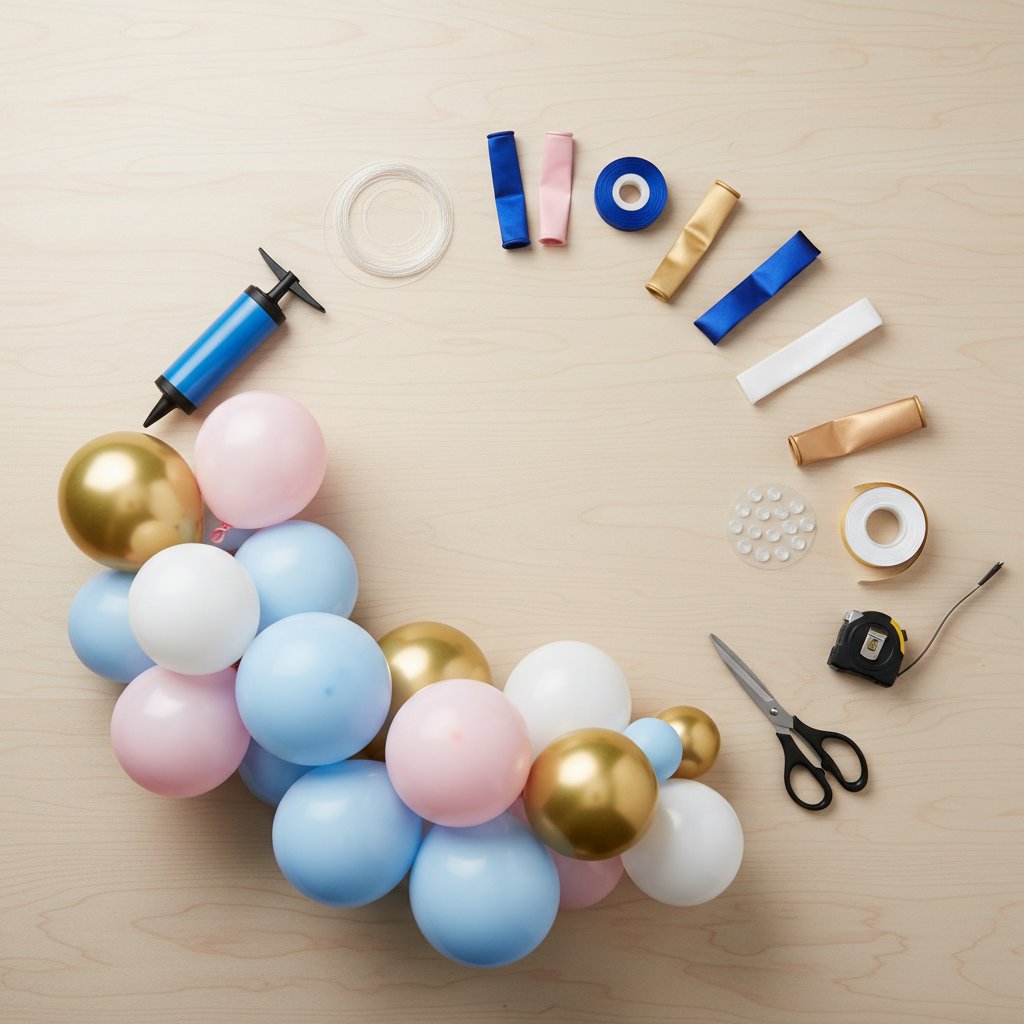
Air-filled balloon garlands attached to walls or frames look just as impressive and last 20 times longer. Use glue dots, fishing line, or balloon-specific strips. An electric balloon pump costs $25 and will save your lungs and your sanity.
If you must use helium, add Hi-Float treatment inside each balloon. It extends float time from 8 hours to 24 hours. Costs about 10 cents per balloon.
Step 4: Test Everything One Week Out
Inflate 10 balloons from your order. Check for weird shapes, weak spots, or color inconsistencies. Practice your knotting technique. Time how long inflation takes. This test run reveals problems while you still have time to fix them.
Never Let This Happen Again
Keep a party supply kit with extras: balloon glue dots, fishing line, clear tape, scissors, and a manual pump as backup. Store balloons in a temperature-controlled space—not your garage or car trunk.
Take photos of your successful setups with notes about quantities used, time invested, and what worked. Future you will thank present you.
The difference between balloon projects that wow and balloon projects that fail isn't talent. It's knowing that gorgeous installations require 40% more supplies, 60% more time, and 100% more planning than anyone admits. Now you know.